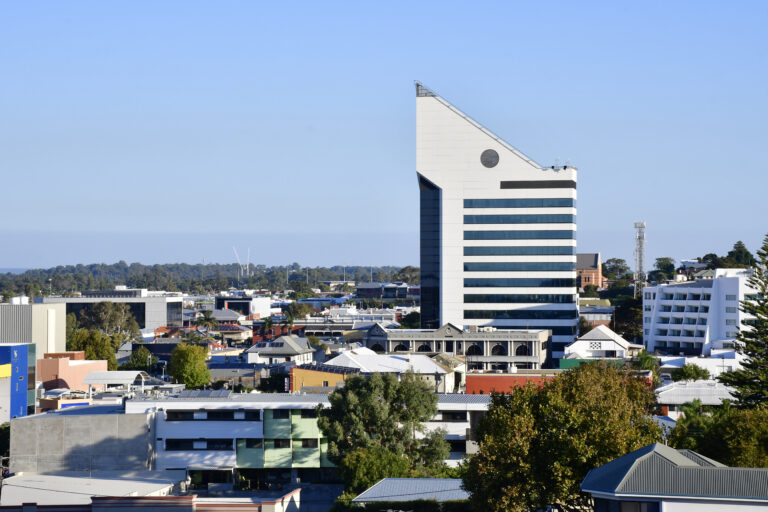
Bunbury City
The port city of Bunbury is the regional capital of the South West Region of Western Australia.
The city is world renowned for its wild bottlenose dolphins. Visitors and locals alike can enjoy swimming with these magnificent creatures in Koombana Bay in the heart of this thriving centre.
Surrounded by water on three sides, Bunbury boasts beautiful beaches, rivers and inlets and affords its residents unique waterfront living. It has a mild Mediterranean climate - with its dry summer months and winter rainfall. It's rarely too hot and never too cold.
Bunbury's Back Beach is a popular swimming and surfing spot and the foreshore has been transformed into a highly attractive seaside location thanks to a $7.5 million redevelopment program funded by the WA State Government.
The city offers a wide variety of retail shopping and excellent education services with its own university campus, a technical and further education campus and quality public and private schools.
Its residents have available high quality housing, from one bedroom units to luxury seaside manors. The South West Development Commission has been integral in a major urban renewal project around the attractive Marlston Hill precinct. Formerly home to oil refineries and water treatment facilities, the land is now attractive village-style living.
The city is also home to the South West Area Health campus which services patients from throughout the South West. It includes two modern hospitals - one public, one private - and provides 24 hour emergency care as well as mental and allied health facilities.
Bunbury is well known for its 'cappuccino strip' coffee culture and is on the doorstep of the beautiful Ferguson Valley wine and dairy region.
It's an outdoor life and people can enjoy leisure activities including boating, fishing, swimming and canoeing. For those who enjoy sport the city is home to an abundance of playing fields with organised sports including Australian Rules football, soccer, hockey, basketball and much more. It also has high quality golf courses, yacht and power boat clubs, race tracks, swimming pools and horse racing facilities.
Bunbury Regional Art Galleries hosts art exhibitions and experiences for residents and visitors - including regular contributions from the region's Noongar Aboriginal artists. The South West Development Commission is an active promoter of the region's Aboriginal arts industry.
Bunbury is well serviced by road, rail and bus services and it is around two hours drive from the Western Australian State capital of Perth.
It has its own small-scale airport and a fast-train passenger service runs between Perth and Bunbury daily.
Bunbury's port is one of Australia's biggest regional facilities. It services the export of bulk commodities such as alumina, woodchips and mineral sands. The port also handles a range of other general cargo imports and exports. The Commission continues to work with the Bunbury Port Authority and other partners seeking to secure containerised shipping for the city in the near future.
Many of the city's residents rely on the mining, manufacturing, building and retail industries for their work. The South West is home to some major companies including BHP-Billiton's Worsley Alumina Refinery, Lyondell, Iluka Resources and Bemax/Cable Sands mineral sands operations. The South West Development Commission is working to ensure there is an abundance of industrial land and supporting infrastructure to drive forward future industrial growth.Greater Bunbury
Greater Bunbury encompases the City of Bunbury (Bunbury City), as well as the neighbouring areas of Dalyellup, Gelorup and Stratham (Capel Shire), Australind and Leschenault (Harvey Shire), and Eaton (Dardanup Shire).The Greater Bunbury area is home to approximately 63,000 people with its population increasing at an average annual growth rate of 4.2 per cent over the past five years. This is more than double the national population growth rate of 1.5 per cent for the same period.